01
Branch & Edge
Compact, low-power platforms for distributed network deployments.
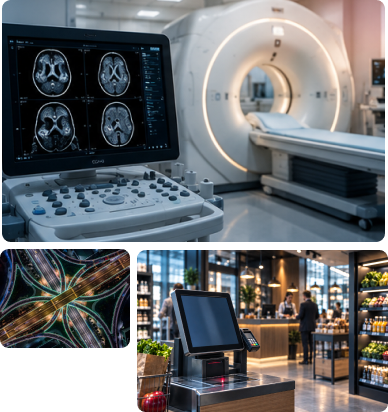
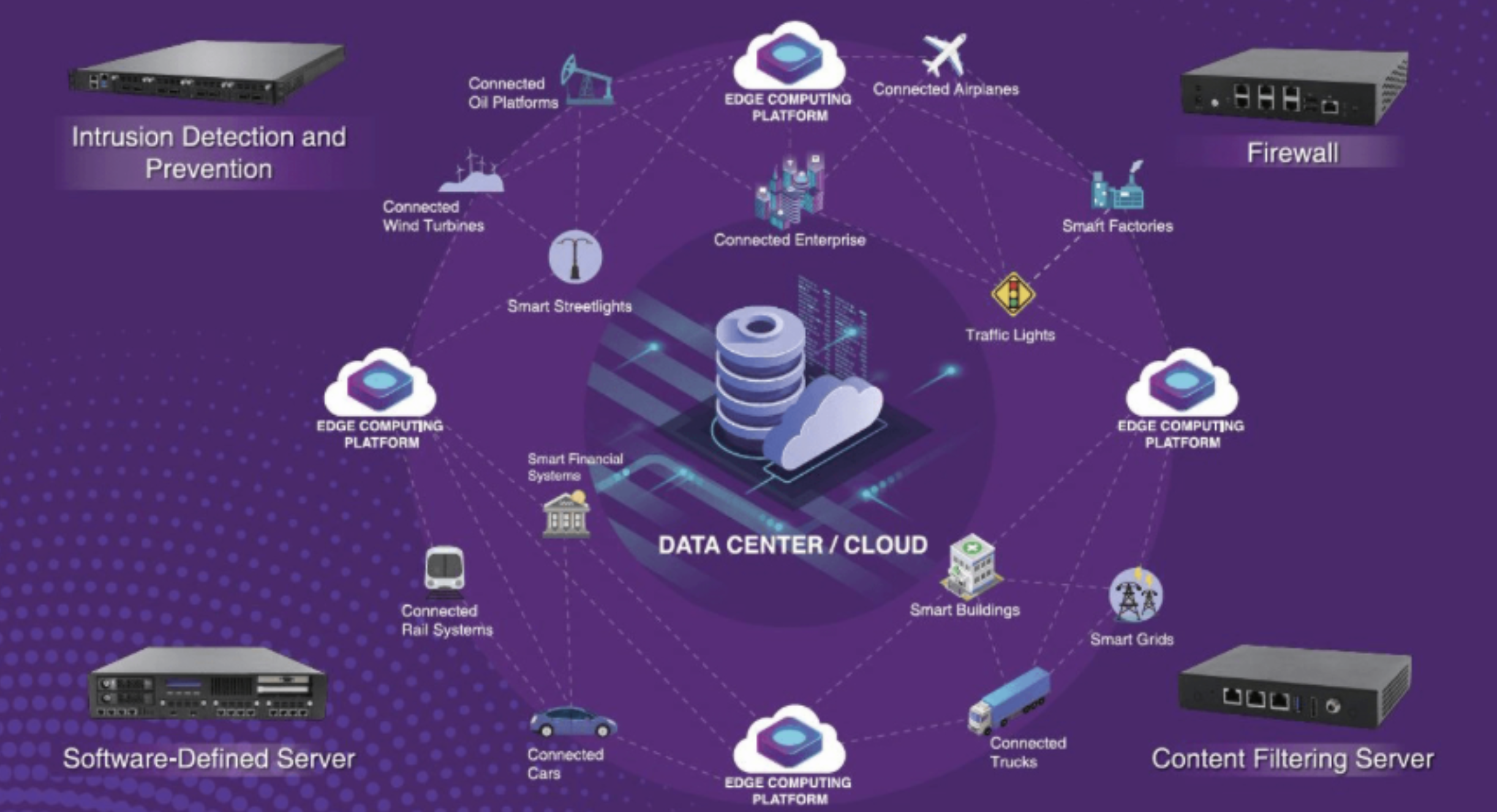
Portwell network appliances give solution providers, network equipment vendors and service providers a reliable hardware foundation for SD-WAN, uCPE, next-generation firewall, VPN, intrusion detection, content filtering, UTM and other virtualized network functions.
From compact fanless desktop gateways for branch offices to 1U and 2U rackmount systems for the data center, our platforms combine high-density networking, hardware security and long-term availability - with options such as TPM, IPMI and LAN bypass for secure, reliable operation.
Network infrastructure is becoming more distributed, software-defined and performance-intensive. Network appliances need to combine computing performance, high-density connectivity, security, flexibility and long-term availability in a single platform.
Compact, low-power platforms for distributed network deployments.
High-performance rackmount systems with extensive networking and expansion capabilities.
Rugged platforms designed for deployment beyond climate-controlled IT environments.
Flexible hardware platforms for SD-WAN, uCPE, firewall, routing and other virtualized network functions.
Defines and implements network security policies, including how end-node devices are allowed to connect to the network.
Permits or denies network communication based on pre-defined rules between the public internet and the private enterprise network.
Creates a virtual tunnel that protects the data and IP address of remote users on the public internet.
Identifies, logs and reports possible incidents and blocks detected intrusion attempts.
Runs on secure web gateways to scan incoming network data and prevent malware threats.
Monitors outbound sensitive data and stops the delivery of restricted content if not authorized.
An all-in-one appliance combining network security functions - less complex and more cost-effective.
Manages the bandwidth of outbound links between enterprise network and internet based on congestion and current load.
Advanced traffic management in the data center that controls traffic flow to servers based on application-specific criteria.
Choose by deployment: fanless desktop systems for branch and edge sites, compact appliances for SD-WAN and uCPE, and 1U/2U rackmount platforms for enterprise and data-center security.
For branch offices, IoT gateways and space-constrained edge deployments.
Flexible networking platforms with expansion capabilities for branch infrastructure.
High-performance platforms for enterprise security, routing and data-center applications.
Thermal analysis, ingress protection, vibration, HALT, ESD, EMS, power integrity, EMI and signal integrity testing.
A global leader in embedded computing and long-time Intel® Partner Alliance member, with product longevity and engineering expertise for OEMs and system integrators.
Engineering, product development, production planning, quality assurance, integration and logistics.
Extended availability and managed revision control that protect your qualifications across long deployment lifecycles.
Local application engineers guide platform selection through deployment.
Copper and fiber ports, SFP+/QSFP and OCP NIC expansion - scaled to the throughput of your network stack.
Hardware-level bypass helps maintain network traffic continuity if an appliance loses power or experiences a software failure.
Optimized packet processing for demanding network workloads.
Options including IPMI and TPM for remote administration and hardware-based security.
Network equipment vendors need hardware that remains stable throughout the lifecycle of their software and network products. Portwell's DMS capabilities support customization from initial platform design through production.
Custom port configurations, expansion cards and NIC/bypass solutions.
Custom chassis and thermal engineering for application-specific deployments.
BIOS/firmware customization, secure boot and OS/network-stack image pre-loading.
ODM/OEM branding, system integration and validation.
CE, FCC and target-market approval support.
Pilot production, volume manufacturing, traceability and logistics.
Technical insights into embedded computing, Edge AI and next-generation platforms.
view whitepapersPractical solutions and implementation examples for your application.
view technical guidesuCPE stands for universal Customer Premises Equipment: one standard x86 appliance at the customer site that runs several network functions as software — firewall, SD-WAN, routing, WAN optimisation — instead of a separate box per function. The hardware stays the same; what it does is defined by the software on it.
SD-WAN manages the wide-area connections of a site: which link a packet takes, and how the traffic between branch, data centre and cloud is steered. SD-Branch goes one step further and puts the local network of the branch — LAN, Wi-Fi, security — on the same platform.
Both remove work from the general-purpose CPU path. Intel® QuickAssist Technology offloads cryptography and compression to dedicated hardware, which matters for VPN and TLS throughput. DPDK bypasses the kernel network stack and processes packets in user space, which raises packet rates and keeps latency predictable.
LAN bypass connects two network ports directly in hardware when the appliance loses power or its software fails. The traffic keeps flowing through the device instead of stopping at it — important wherever an inline appliance sits in a path that must not go down with it.
Desktop appliances are compact and fanless and are built for branch offices, edge sites and places without a server room. Rackmount systems are 1U or 2U, offer far more networking and expansion, and are built for enterprise and data-centre deployments — including redundant power supplies.
Yes — through M.2 or mini-PCIe slots for a cellular module and the matching antenna openings. Which platform fits depends on the module, the number of SIM slots and the thermal budget; our engineers can scope that for a given deployment.
Yes. Portwell’s Design & Manufacturing Services cover custom network I/O and expansion cards, mechanical and thermal design, BIOS and firmware including secure boot and pre-loaded images, ODM/OEM branding and integration, certification support, and the step from pilot to volume production.
Network access control, firewall, VPN, intrusion detection and prevention, anti-spam and anti-virus gateways, content filtering, unified threat management, load balancing and application delivery control — on the same hardware family, differentiated by the software that runs on it.
Tell us about your software, network workload, deployment environment and connectivity requirements. Our engineers will help you identify the right platform or scope a customized appliance.