
01
On-Board
Computing for trains, buses and other vehicles where space, power and vibration are critical.
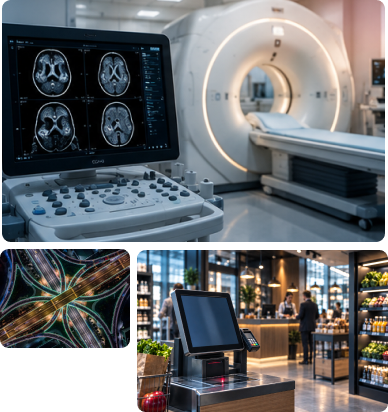
Portwell provides rugged embedded computing for railway, road and public transportation — from on-board and wayside systems to stations, traffic infrastructure and connected vehicles.
Our fanless systems, edge AI computers, embedded boards and industrial panel PCs are designed for wide temperature ranges, wide voltage input, shock and vibration — and for railway standards such as EN 50155 and EN 50121.
Computing for trains, buses and other vehicles where space, power and vibration are critical.
Rugged systems designed for changing temperatures, moisture, vibration and continuous connectivity.
Reliable computing for passenger information, HMI, monitoring and intelligent infrastructure.
Edge computing for traffic management, vision systems and connected infrastructure.
Transportation computers must keep running under vibration, temperature extremes, moisture and unstable power - for years, without maintenance. Portwell platforms are designed and validated for exactly these conditions.
Railway Compliance
Designed for rolling-stock electronics and railway EMC requirements.
Wide Temperature Range
Reliable operation from arctic winters to sun-exposed enclosures.
Wide Voltage Input
Direct connection to road-vehicle and locomotive power.
Anti-Shock & Anti-Vibration
Rugged mechanical design for continuous movement and vibration.
Waterproof & Anti-Corrosion
Protection against moisture, dust and corrosive environments.
Robust I/O Connectivity
Locking connectors and robust interfaces for secure connections.
On-board and wayside computing for railway systems.
Real-time computing for traffic monitoring and intelligent infrastructure.
Telematics, fleet management, infotainment, surveillance and vehicle connectivity.
Passenger information, operator systems, surveillance and intelligent facility management.
Connected computing for passenger information, entertainment and vehicle systems.
Connected computing for passenger information, entertainment and vehicle systems.
Connected computing for passenger information, entertainment and vehicle systems.
Thermal analysis, ingress protection, vibration, HALT, ESD, EMS, power integrity, EMI and signal integrity testing.
A global leader in embedded computing and long-time Intel® Partner Alliance member, with product longevity and engineering expertise for OEMs and system integrators.
Engineering, product development, production planning, quality assurance, integration and logistics.
Extended availability and managed revision control that protect your qualifications across long deployment lifecycles.
Local application engineers guide platform selection through deployment.
Select by system architecture, from rugged fanless computers and edge AI systems to board-level platforms and industrial panel PCs.
Compact, low-maintenance computing for demanding transportation environments.
Local AI inference and image processing for intelligent transportation applications.
Board-level platforms for OEMs developing application-specific transportation equipment.
Rugged display and computing platforms for HMI, passenger information and operator control.
Modern transportation systems depend on continuous connectivity and local processing, from vehicle telematics and fleet management to intelligent traffic and station infrastructure.
LTE, Wi-Fi, GPS and other wireless interfaces for continuously connected transportation systems.
Process data locally where latency and immediate response matter.
Support intelligent traffic monitoring, image processing and AI-enabled transportation applications.
Connect transportation systems with sensors, cameras, control systems and existing infrastructure.
Transportation systems often require application-specific mechanical, electrical and environmental requirements. Portwell's Design & Manufacturing Services support customized computing platforms from initial design through production and deployment.
Application-specific computing and I/O configurations.
Mechanical designs for transportation and outdoor environments.
Wide-voltage and application-specific power management.
Customized interfaces, isolated I/O and transportation-grade connectors.
Platform-specific configuration and system integration.
Engineering, validation and scalable manufacturing.
Technical insights into embedded computing, Edge AI and next-generation platforms.
view whitepapersPractical solutions and implementation examples for your application.
view technical guidesEN 50155 is the European standard for electronic equipment used on rolling stock. It defines requirements for temperature, humidity, shock and vibration, supply voltage interruptions and EMC. Equipment designed to it can be installed on trains without additional qualification of the basic environmental behaviour.
The platforms on this page are specified from -40 °C to +70 °C. That covers both arctic winters and enclosures exposed to direct sunlight, which is why the systems are built fanless.
Yes. The systems accept a wide voltage input of 12–36 V for road vehicles and 72–110 V for locomotive power, so no separate conversion stage is required.
Portwell designs and validates its transportation platforms for EN 50155 and EN 50121 and operates in-house testing labs for thermal analysis, ingress protection, vibration, HALT, ESD, EMC and signal integrity. The final certification of a complete installation remains with the system owner.
Yes. Portwell’s Design & Manufacturing Services cover custom carrier boards, rugged enclosures, power design, I/O and connectivity, BIOS and firmware, and the step from pilot to volume production.
A fan is a moving part: it wears out, draws in dust and moisture, and is the first component to fail under continuous vibration. Fanless designs remove that failure point and allow sealed, IP-rated enclosures.
On-board computing in trains and buses, wayside and outdoor installations, stations and transportation hubs, and roadside and traffic infrastructure — including telematics, fleet management, passenger information, surveillance and intelligent traffic management.
Tell us about your deployment — on-board, wayside, station or roadside and our engineers will recommend the right platform or scope a custom design.